On the Lines
Responder development priorities are shaped each year by what we hear on the lines and by the topics responders want to learn about.
This year, partner organizations provided training on medical assistance in dying (MAID), homelessness, and intimate partner violence.
We also expanded our course offerings, strengthened community partnerships, and joined new training lists—building our own knowledge while supporting others.
To improve accessibility and flexibility, we shifted all training to a remote format.
This allowed participation from people unable to travel to DCOR’s downtown Ottawa office or those with accessibility needs, broadening the diversity of our team.
We also enhanced support for responders during shifts.
A new supervision model introduced “Listen and Learn” shifts, where experienced responders listen to live calls and offer real-time coaching.
A competency-based rubric and end-of-shift reports now provide consistent, actionable feedback.
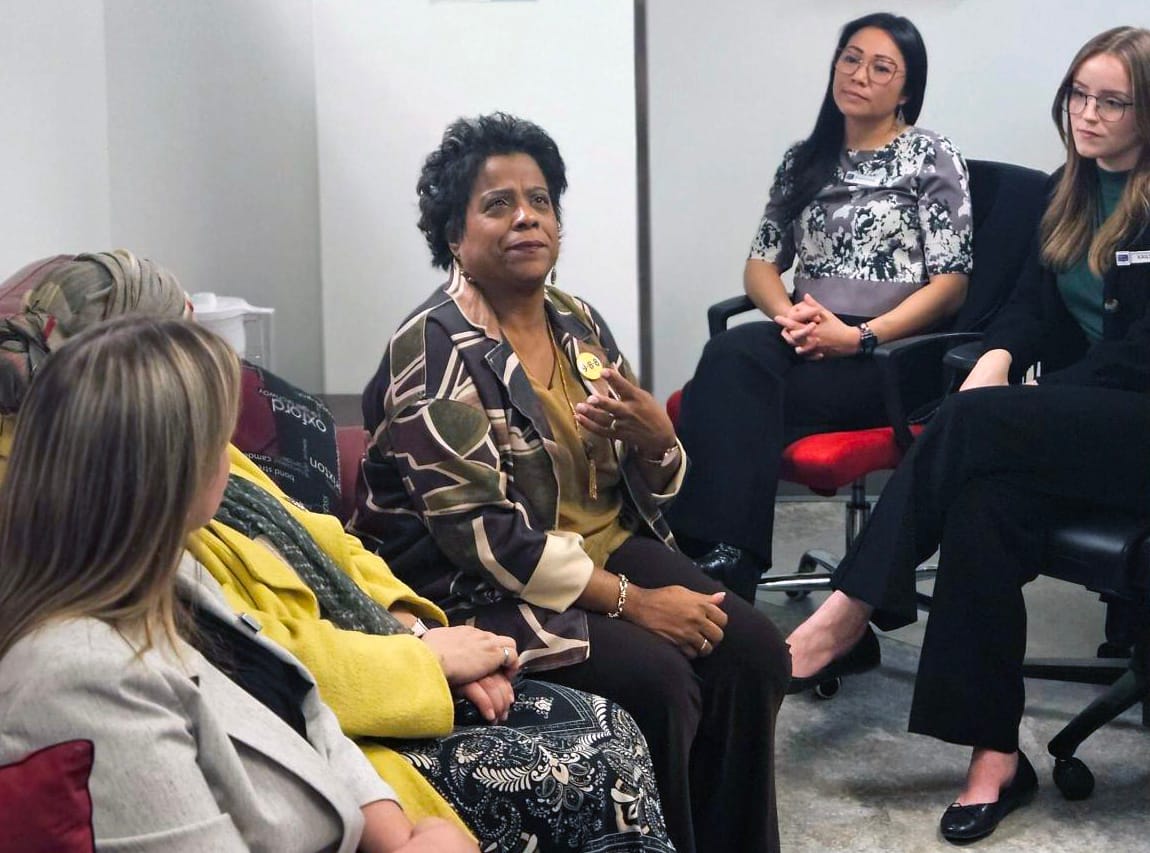
In December, DCOR was honoured to host The Honourable Minister Marjorie Michel, Minister of Health and Ms. Nancy Hamzawi, President of the Public Health Agency of Canada, alongside colleagues from CAMH.
The Minister spoke directly with our responders about the importance of mental health supports in the community.
We were grateful for their acknowledgement of DCOR’s role as a founding partner of Canada’s 9-8-8 Suicide Crisis Helpline as well as our status as one of the initiative’s top partners by call volume.
On January 16th, DCOR warmly welcomed the announcement of the 9-8-8 Helpline’s renewal.
This is a clear signal of confidence in this work and the value of this community-based model of care.